
The circular tire economy jobs conversation is no longer theoretical. Across the U.S. tire industry, sustainability has moved from pilot projects and press releases into real manufacturing decisions bringing with it a wave of new job categories, skills shortages, and leadership demands that employers can’t afford to ignore.
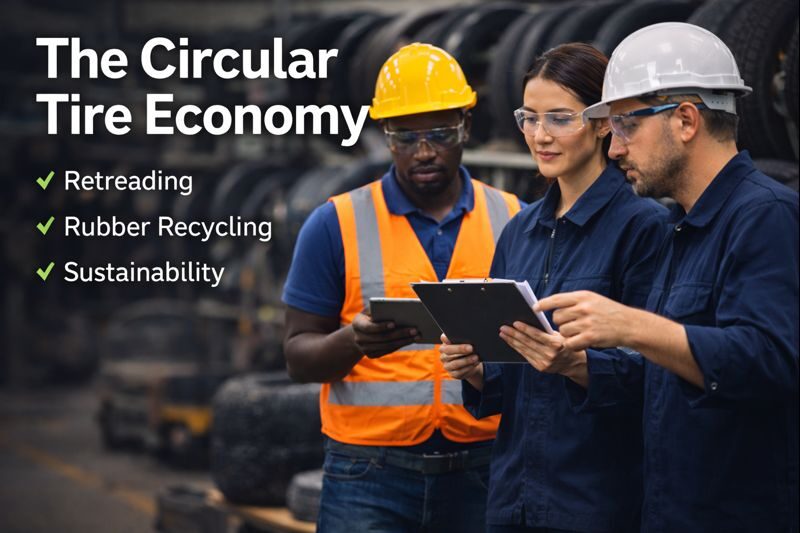
For decades, tire manufacturing followed a largely linear model: produce, sell, replace, discard. Today, rising material costs, regulatory pressure, ESG expectations, and supply-chain volatility are forcing the industry to rethink that approach. The result is a growing emphasis on retreading, rubber recycling, and closed-loop manufacturing systems and with it, a new employment landscape.
This article explores where job growth is emerging, which roles are becoming critical, and how tire manufacturers, recyclers, and retreaders must adapt their hiring strategies to stay competitive in a circular economy.
Why the Circular Tire Economy Is Accelerating Now
Several converging forces are pushing the tire industry toward circularity:
1. Raw Material Volatility
Natural rubber prices have remained volatile over the past decade, while synthetic rubber inputs are increasingly tied to fluctuating oil markets. According to industry data, raw materials account for 55–65% of total tire production costs, making material recovery and reuse economically attractive, not just environmentally responsible.
2. Regulatory and ESG Pressure
States such as California, Washington, and New York are tightening waste tire regulations, while corporate ESG disclosures increasingly require verifiable reductions in landfill disposal and carbon footprint. Sustainability reporting is no longer optional for suppliers serving OEMs, fleets, and large distributors.
3. Fleet Economics and Retreading Demand
In commercial trucking, retreaded tires can cost 30–50% less than new tires while delivering 80–90% of the original tread life. As fleets look to reduce operating costs without sacrificing uptime, retreading volumes are rising particularly in regional and last-mile delivery networks.
Retreading: A Mature Practice Creating New Leadership Roles
Retreading is not new but the scale, technology, and expectations around it are changing rapidly.
Modern Retread Facilities Are No Longer “Back-of-Shop”
Today’s retread plants resemble advanced manufacturing environments, with:
- Automated inspection systems
- X-ray and shearography testing
- Data-driven casing lifecycle tracking
- Strict quality and compliance requirements
This evolution is driving demand for new leadership and technical roles, including:
Retread Plant Managers
Modern retread plant managers are expected to balance:
- Lean manufacturing principles
- Workforce training and safety
- Quality assurance tied to OEM and fleet standards
- Sustainability and waste-reduction metrics
Unlike traditional plant leadership roles, these managers must bridge operations, compliance, and customer trust, a combination that is increasingly difficult to hire for.
Process Engineers & Quality Specialists
Advanced retreading requires engineers who understand:
- Rubber chemistry and bonding behavior
- Cure cycles and failure analysis
- Statistical process control (SPC)
These professionals are often competing with broader manufacturing sectors for the same talent pool.
Rubber Recycling: From Waste Management to Advanced Manufacturing
Rubber recycling has undergone a quiet transformation. What was once primarily a disposal function is now a materials science and innovation discipline.
Where the Jobs Are Emerging
Chemical Engineers & Materials Scientists
Recycled rubber is increasingly used in:
- Modified asphalt
- Industrial flooring
- Athletic surfaces
- New tire compounds and non-tire products
This has created demand for engineers who can optimize devulcanization, blending, and compound performance skills traditionally found in petrochemical or specialty materials industries.
Recycling Operations & Compliance Leaders
Recycling facilities now face:
- Environmental permitting
- Emissions tracking
- Worker safety compliance
- ESG reporting obligations
Operations leaders must manage both throughput efficiency and regulatory risk, making this one of the fastest-evolving leadership roles in the sector.
The Hidden Talent Gap in Sustainable Tire Manufacturing
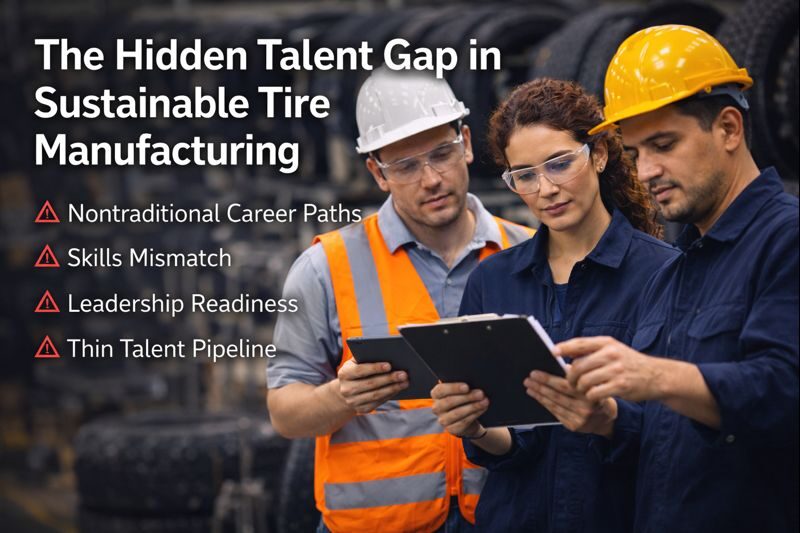
Despite job growth, many employers are struggling to fill these roles. The reasons are structural.
1. Nontraditional Career Paths
Most professionals don’t “grow up” planning a career in tire recycling or retreading. As a result, talent pipelines are thin, and lateral hiring from adjacent industries is common but risky without proper vetting.
2. Skills Mismatch
A chemical engineer from consumer goods manufacturing may understand polymers but not tire-specific stress, load, and heat dynamics. Likewise, a plant manager from food manufacturing may lack experience with industrial safety risks unique to rubber processing.
3. Leadership Readiness
As sustainability initiatives scale, many organizations discover they lack leaders who can translate environmental goals into operational execution. This is especially true in privately held and family-owned tire businesses.
New Job Categories Defining the Circular Tire Economy
Across the U.S., employers are quietly adding job titles that barely existed five years ago:
- Circular Manufacturing Program Manager
- Rubber Recovery & Materials Optimization Lead
- Retread Quality Systems Director
- Sustainability Operations Manager
- ESG & Compliance Integration Lead (Manufacturing)
These roles sit at the intersection of Sales, engineering, operations, compliance, and strategy and are notoriously difficult to fill through traditional job postings.
What This Means for Employers in 2026
Hiring Will Become More Specialized
Generic manufacturing recruiters often lack the domain knowledge to evaluate candidates for circular economy roles. Employers will increasingly rely on industry-specific search partners who understand tire manufacturing realities.
Compensation Structures Will Shift
As demand grows, expect:
- Premium pay for experienced retread leaders
- Increased signing incentives for materials specialists
- Long-term retention bonuses tied to sustainability outcomes
Culture Will Matter More Than Ever
Candidates drawn to circular economy roles often care deeply about mission alignment. Employers that treat sustainability as a checkbox not an operating principle will struggle to attract top talent.
The Strategic Advantage of Getting This Right
Organizations that successfully build teams around retreading and rubber recycling gain more than regulatory compliance. They unlock:
- Lower long-term material costs
- Stronger OEM and fleet relationships
- Improved employer brand among younger technical talent
- Greater resilience against supply-chain disruptions
In short, the circular tire economy isn’t just an environmental initiative, it’s a workforce strategy.
Final Thoughts: Sustainability Is Now a Talent Problem
The shift toward a circular tire economy is irreversible. As retreading volumes grow and rubber recycling becomes more sophisticated, the industry’s biggest constraint won’t be technology, it will be people.
For tire manufacturers, recyclers, and service providers, the question is no longer if these roles matter but whether you can attract and retain the leaders capable of building them.
Those who act early will define the next decade of sustainable tire manufacturing. Those who wait will find themselves competing for a shrinking pool of highly specialized talent at a premium cost.