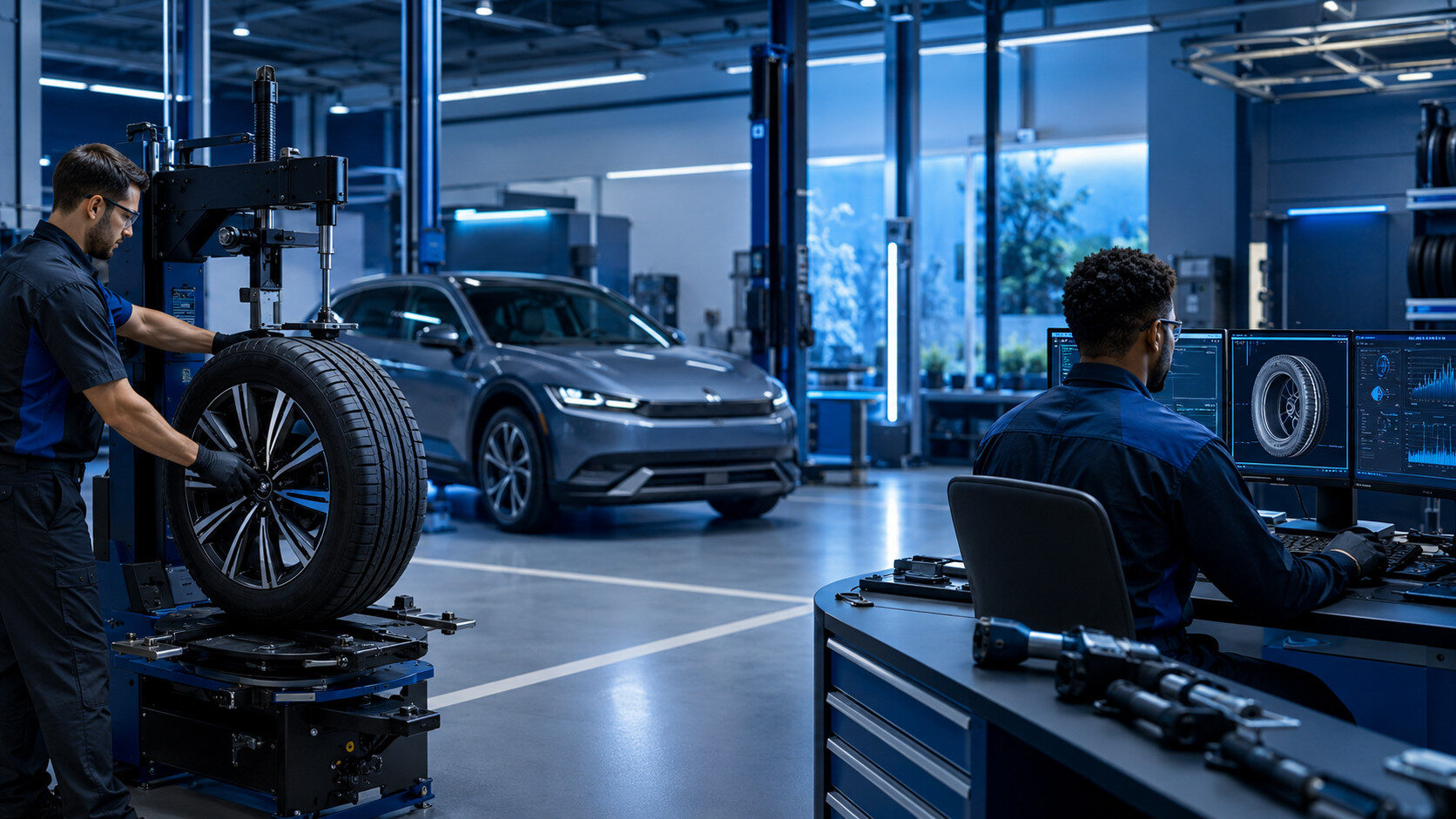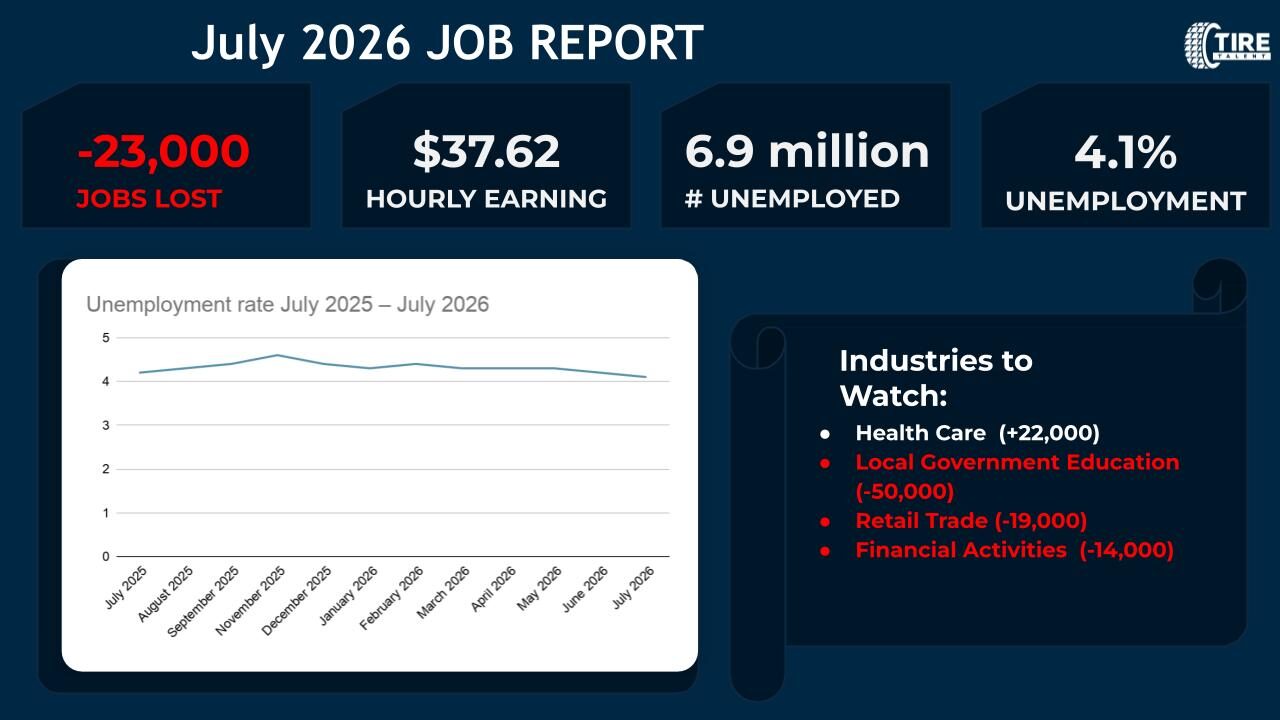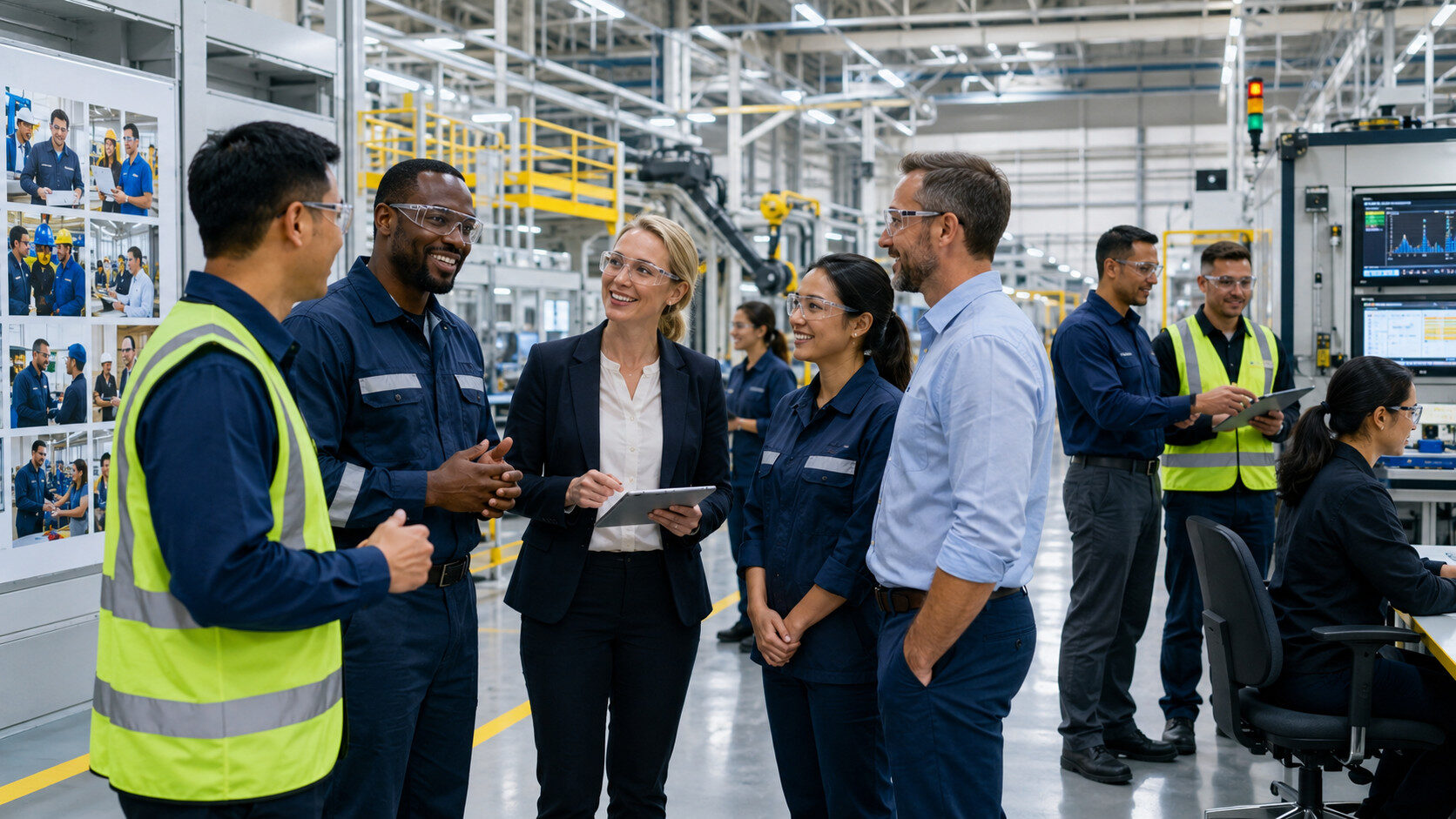

The workforce trends shaping automotive in 2026 are redefining how tire dealers, independent repair shops, and automotive manufacturers hire, retain, and develop talent across the United States. The industry is not just experiencing a labor shortage, it is navigating a skills transformation, generational shift, wage reset, and technology disruption all at once.
For automotive employers, especially in the tire sector, 2026 is not about incremental change. It is about structural change.
If you’re a dealer principal, multi-location operator, OEM leader, or private equity-backed platform, the decisions you make about workforce strategy in the next 12–24 months will determine your competitiveness for the next decade.
This article breaks down:
- The biggest automotive workforce trends in 2026
- Where hiring pressure is intensifying
- How EV and advanced technology are shifting skill requirements
- Why pay models are being restructured
- What retention now requires
- And how forward-thinking employers are staying ahead
Let’s dive in.
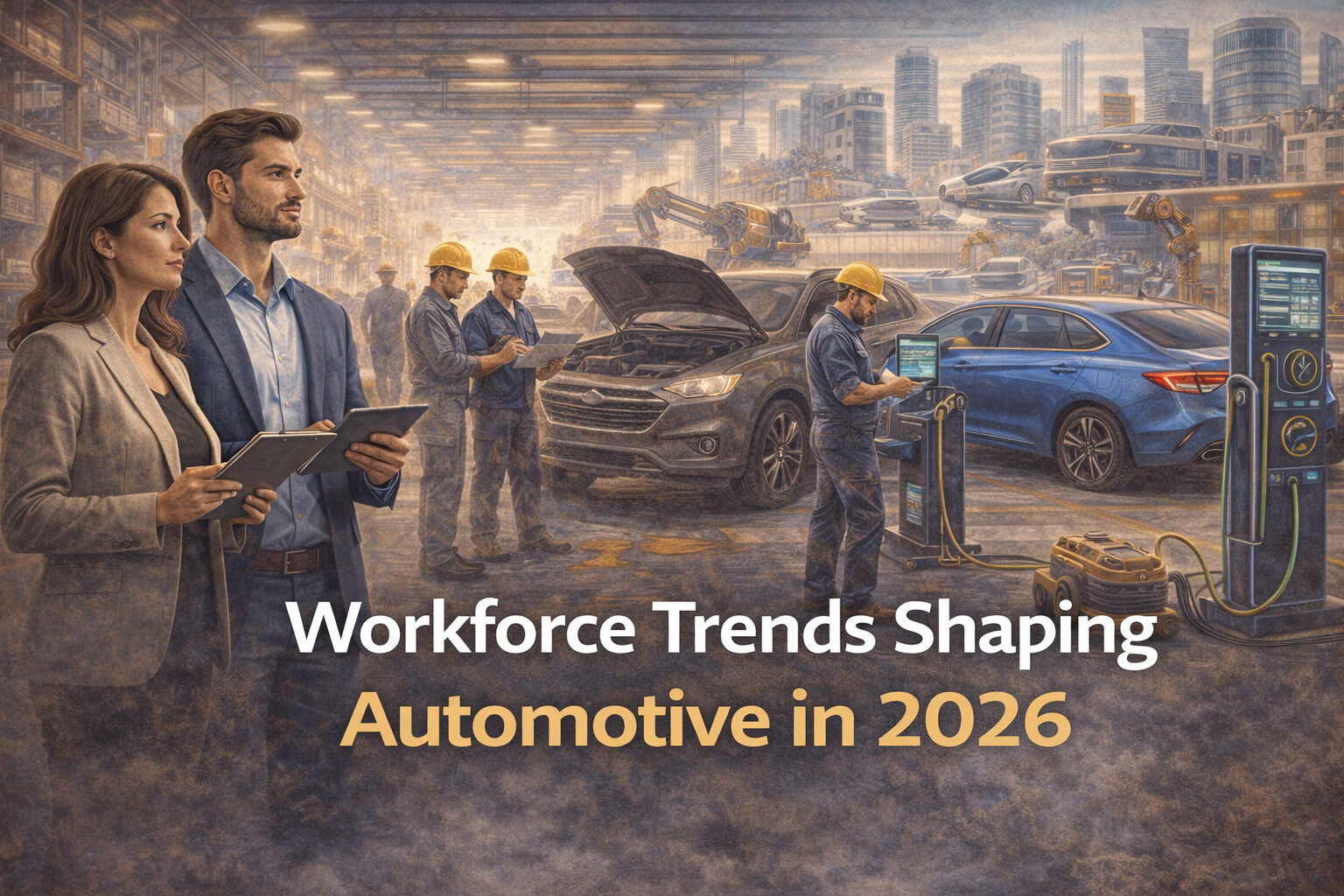
1. The Technician Shortage Is Structural Not Cyclical
The automotive technician shortage has been discussed for years. But in 2026, it’s clear this isn’t a temporary cycle, it’s a demographic reality.
The Numbers Behind the Shortage
According to industry workforce estimates:
- The U.S. automotive industry needs tens of thousands of new technicians annually
- Retirement rates among skilled technicians are accelerating
- Fewer young workers are entering traditional trade pipelines
In tire and service environments, the impact is even more visible:
- Longer customer wait times
- Reduced bay utilization
- Revenue left on the table
- Burnout among existing techs
What’s changed in 2026 is that most operators now accept that the pipeline will not “naturally refill.”
The question is no longer:
“When will labor improve?”
It’s:
“How do we build our own pipeline?”
2. EV & Advanced Vehicle Technology Are Reshaping Skill Requirements
One of the most important workforce trends shaping automotive in 2026 is the acceleration of EVs, ADAS systems, and connected vehicle technology.
Even in tire and service-focused environments, the implications are significant:
- EV-specific tire requirements
- Heavier vehicle weight management
- Calibration requirements after tire and suspension work
- High-voltage safety protocols
- Software-driven diagnostics
The Skills Gap Is Expanding
Technicians are now expected to understand:
- Electrical systems
- Battery safety
- Diagnostic software
- Sensor calibration
- Data-driven repair workflows
This creates a widening gap between:
- Traditional mechanical experience
- Modern automotive skill requirements
Forward-looking tire businesses are investing in:
- Structured upskilling programs
- OEM-aligned certifications
- Partnerships with technical schools
- Apprenticeship models
In 2026, hiring a technician is no longer enough.
You must evaluate learning agility and adaptability, not just past experience.
3. Compensation Models Are Being Rewritten
Another major workforce trend shaping automotive in 2026 is the evolution of pay structures.
For decades, flat-rate models dominated technician compensation. But today:
- Younger workers prefer predictable income
- Incentive complexity discourages entry-level talent
- Competing industries offer steady hourly pay with benefits
What We’re Seeing Across the U.S.
More employers are experimenting with:
- Hybrid pay models (higher base + incentive)
- Guaranteed minimum hours
- Tiered skill pay increases
- Transparent promotion paths
- Retention bonuses
In competitive markets, especially metro areas, wage pressure is increasing.
The real shift isn’t just higher pay, it’s clearer pay.
Technicians want:
- Visibility into earning potential
- Defined growth steps
- Skill-based raises
- Stability
Businesses that modernize compensation are seeing measurable improvements in:
- Offer acceptance rates
- Retention
- Referral hiring
4. Multi-Generational Workforce Tension Is Rising
In 2026, the automotive workforce includes:
- Baby Boomers nearing retirement
- Gen X leaders
- Millennials in management roles
- Gen Z technicians entering the field
This creates cultural friction especially on the shop floor.
Key Differences Emerging
Younger workers prioritize:
- Work-life balance
- Purpose-driven environments
- Frequent feedback
- Clear growth paths
Older technicians may value:
- Independence
- Skill mastery
- Autonomy
- Traditional pay incentives
Front-line managers are now the most important variable in retention.
Bad managers drive turnover.
Strong managers build loyalty.
Forward-thinking organizations are investing in:
- Leadership training for shop managers
- Conflict resolution skill development
- Emotional intelligence coaching
- Structured onboarding frameworks
The best tire businesses in 2026 understand that retention starts with supervision quality.
5. Employer Brand Now Drives Hiring Outcomes
In previous decades, tire businesses relied on:
- Walk-in applicants
- Word-of-mouth
- Basic job board postings
That model no longer works consistently.
Today’s workforce trends shaping automotive in 2026 show that:
- Candidates research companies online
- Reviews influence application decisions
- Social media impacts perception
- Website quality affects trust
Employer brand is no longer optional.
It includes:
- Online presence
- Leadership visibility
- Career page clarity
- Community engagement
- Internal culture reputation
In competitive markets, employer brand can determine whether:
- A technician applies
- A candidate accepts
- A high performer stays
Companies that treat hiring as a marketing function are outperforming competitors.
6. Hiring Speed Has Become a Competitive Advantage
Another workforce trend shaping automotive in 2026 is time-to-hire compression.
In strong labor markets:
- Qualified techs receive multiple offers
- Delayed decision-making costs hires
- Interview processes that drag lose candidates
High-performing operators are:
- Interviewing within 48 hours
- Making same-week offers
- Streamlining background processes
- Reducing multi-stage approvals
In automotive hiring today, speed signals seriousness.
Slow hiring signals internal disorganization.
7. Career Path Visibility Is Now a Retention Strategy
One of the most overlooked trends shaping automotive workforce dynamics is career transparency.
Many technicians leave not for higher pay but for unclear futures.
Leading employers now publish:
- Skill progression ladders
- Certification milestones
- Promotion benchmarks
- Manager-track options
- Master technician pathways
This shifts the conversation from:
“Where else can I work?”
to
“Where can I grow here?”
Retention improves when progression is structured, not assumed.

8. Automation & AI Are Influencing Workforce Planning
While AI will not replace technicians, it is influencing:
- Diagnostic processes
- Workflow management
- Scheduling systems
- Inventory optimization
- Performance tracking
This means future hiring must consider:
- Digital literacy
- Comfort with software systems
- Adaptability to tech-enabled processes
The technician of 2026 must be:
- Mechanically capable
- Technologically fluent
Employers that ignore digital skill requirements risk operational bottlenecks.
9. Geographic Talent Gaps Are Intensifying
Not all markets are equal.
In 2026, certain U.S. regions are experiencing:
- Severe technician shortages
- Wage escalation wars
- Migration of skilled labor
- Increased competition from fleet and dealership groups
Multi-location operators must think regionally:
- Are you hiring from within commuting distance only?
- Are you supporting relocation?
- Are you building local school partnerships?
The most resilient companies treat workforce planning as a strategic function not a reactive one.
10. Retention Now Costs Less Than Constant Hiring
Perhaps the most important workforce trend shaping automotive in 2026 is this:
Retention has become cheaper than recruitment.
Consider the cost of losing a skilled technician:
- Lost revenue from idle bays
- Overtime strain on remaining staff
- Hiring advertising costs
- Onboarding time
- Productivity ramp-up delay
Many businesses underestimate this hidden cost.
Retention strategies that are working:
- Stay interviews
- Skill investment
- Recognition programs
- Leadership accessibility
- Clear communication during operational change
Organizations that measure turnover cost per technician are often shocked by the number.
What U.S. Tire & Automotive Employers Should Do Now
To stay competitive in 2026, leaders must:
1. Audit Workforce Stability
- Turnover rate
- Time-to-fill metrics
- Compensation competitiveness
- Manager capability
2. Modernize Compensation Models
- Transparent pay structures
- Clear incentive design
- Skill-based increases
3. Invest in Manager Development
- Front-line leadership training
- Communication coaching
- Accountability frameworks
4. Strengthen Employer Brand
- Update careers page
- Highlight team stories
- Improve online reputation
5. Build Talent Pipelines
- Technical school partnerships
- Internship programs
- Referral bonuses
Final Thoughts: 2026 Is a Workforce Inflection Point
The workforce trends shaping automotive in 2026 reveal a simple truth:
This is not a temporary hiring challenge.
It is a long-term transformation.
Technology is evolving.
Demographics are shifting.
Expectations are rising.
Compensation models are changing.
The tire and automotive businesses that thrive in 2026 and beyond will be those that treat workforce strategy as a core operational priority not an HR function.
Labor is no longer just a line item.
It is the competitive advantage.