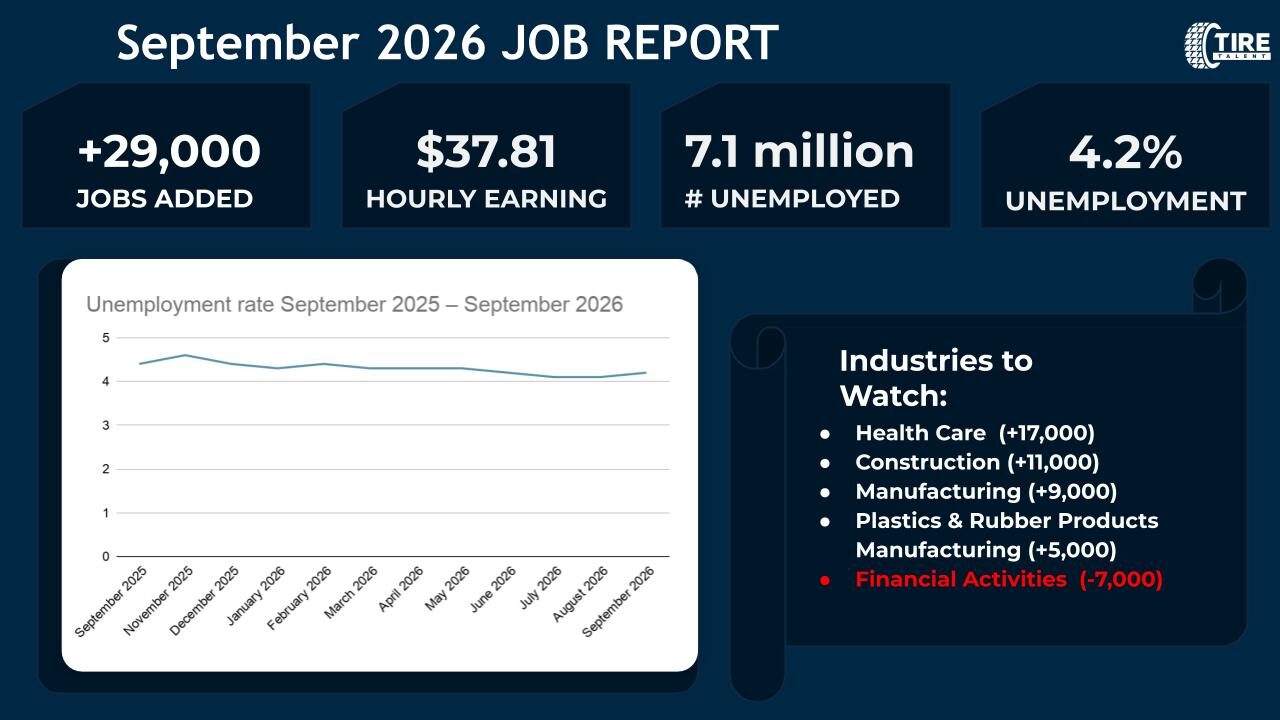

The tire industry in 2026 is larger, more technically demanding, and more career-rich than most people outside it realize. The U.S. tire market alone is worth $26.8 billion this year — growing at a 5.2% compound annual rate over the past five years — while the global market has crossed $210 billion and is on pace to reach nearly $250 billion by 2030. The industry supports more than 801,000 jobs nationwide when manufacturing, distribution, retail, and supply chain employment are combined.
Yet outside the industry itself, the tire sector is still broadly treated as a background function of automotive service — the thing that happens between an oil change and a brake job. This perception gap has real consequences for employers who can’t attract the candidates they need, and for job seekers who don’t know the industry offers career paths with above-average compensation, genuine advancement, and strong long-term employment outlook.
This guide covers what the tire industry looks like in 2026 — the market forces driving it, the roles that are in highest demand, the compensation those roles command, and what someone considering a career in the industry should know before deciding whether it’s the right fit.
The Size and Scope of the Tire Industry in 2026
The tire industry is one of the most structurally stable segments of the broader automotive economy. Demand for tires is fundamentally tied to the size of the vehicle parc — the total number of registered vehicles in operation — which continues to grow regardless of new vehicle sales fluctuations. In the United States, there are approximately 290 million registered vehicles. Every one of them needs tires replaced on a regular cycle. This creates a replacement demand floor that insulates the industry from the volatility that affects vehicle manufacturers and auto dealers directly.
The $26.8 billion U.S. market encompasses tire manufacturing, wholesale distribution, and retail service — including the independent tire dealers, regional chains, national chains, and automotive service centers that provide the majority of tire installation and service work. Manufacturing is concentrated among global players operating U.S. facilities, while retail and service is distributed across more than 70,000 tire and automotive service locations nationwide.
Global growth is being driven by expansion in commercial transportation fleets, rising adoption of electric vehicles, increasing demand for fuel-efficient and performance-optimized tire designs, and growth in emerging markets where vehicle ownership rates are rising.
The Jobs Landscape: Who the Tire Industry Employs
The 801,000 jobs supported by the tire industry span a wider range of roles and skill levels than the industry’s public perception suggests. The categories include:
Tire technicians and service professionals — the largest single employment category, covering the technicians who mount, balance, rotate, and repair tires at retail and service locations. This spans entry-level technicians building foundational skills to senior technicians handling commercial accounts, OTR tires, and advanced TPMS and ADAS-adjacent work.
Commercial tire specialists — technicians who service large commercial vehicles, OTR equipment, agricultural machinery, and construction equipment. Commercial tire work is physically demanding and technically complex, and it commands compensation at the upper end of the technician range — frequently $28–$45 per hour for experienced specialists.
Tire store and shop management — service advisors, store managers, district managers, and operations roles at tire retail locations. Management in tire retail offers a clear career ladder from technician to store lead to multi-unit management, with compensation that rises substantially at each step.
Manufacturing and distribution roles — production operators, quality control technicians, maintenance technicians, process engineers, and logistics specialists at tire manufacturing facilities and regional distribution centers.
Sales and wholesale roles — territory sales representatives, fleet account managers, and wholesale specialists serving commercial accounts, independent dealers, and fleet operators.
Compensation: What Tire Industry Roles Actually Pay in 2026
One of the most consistent surprises for people exploring the tire industry is the compensation profile of experienced roles — particularly in commercial work and management. The tire industry salary guide 2026 documents current pay ranges in detail, but the highlights illustrate why the industry deserves serious consideration:
- Entry-level tire technician (uncertified): $14–$18/hr ($29,000–$37,000)
- TIA-certified technician, 1–3 years: $18–$23/hr ($37,000–$48,000)
- Senior retail technician, 3–7 years: $22–$32/hr ($46,000–$67,000)
- Commercial / OTR tire technician, 3–7 years: $28–$45/hr ($58,000–$93,000)
- Tire store manager: $55,000–$90,000 base, with performance bonuses
- District / regional manager: $80,000–$130,000
Wages in the industry have risen meaningfully over the past two years as demand for technicians has outpaced supply. The May 2026 BLS data confirms that overall wage growth for production and service workers is running at 3.4% year over year — with tire and automotive service roles typically exceeding that average given the shortage dynamics in the technician market.
How to Build a Career in the Tire Industry
The tire industry offers one of the more clearly defined career ladders in the skilled trades and service economy — particularly for candidates who enter at the technician level and want to grow into technical specialization, management, or commercial work.
The tire industry career path guide maps this progression in detail. The typical trajectory for a retail technician moves from entry-level mounting and balancing work into alignment, TPMS, and diagnostic work, then into senior technician status, and from there into either a shop management track or a commercial specialization track. The commercial track in particular offers compensation growth that rivals — and in some markets exceeds — what the management track provides.
Certification accelerates this trajectory. TIA (Tire Industry Association) certifications in automotive, commercial, and OTR work are the primary credentialing framework, and employers consistently pay meaningful premiums for certified technicians. Employers who cover exam fees and provide pay increases upon certification completion consistently outperform in technician retention.
For candidates interested in starting or advancing a tire industry career, the entry point is lower than in many skilled trades — most entry-level technician roles require no prior experience — while the long-term earning potential for commercial specialists and managers is competitive with trades that demand years of apprenticeship.
The EV Transition and What It Means for Tire Industry Jobs
Electric vehicles are reshaping the tire industry in ways that create new demand for technical skill rather than replacing existing demand. EVs require tires with specific performance characteristics — lower rolling resistance, higher load ratings, greater durability to handle the additional torque — and they go through tires significantly faster than internal combustion vehicles. Studies indicate EVs wear tires 20–30% faster due to the instant torque delivery of electric motors, which increases replacement frequency and therefore replacement demand.
The EV transition also introduces new technical knowledge requirements for tire service professionals. TPMS systems on EVs operate differently from ICE vehicles, and the growing segment of performance EVs adds complexity to wheel and tire specifications that entry-level technicians cannot manage without training. This creates both a skill gap and a skill premium — technicians with EV-adjacent tire service knowledge are increasingly valuable, and employers who invest in this training create a retention and recruitment advantage.
The Hiring Reality for Tire Dealers and Employers in 2026
For tire dealers and service operators, the labor market in 2026 presents a specific and persistent challenge. More than 55% of tire businesses currently cannot fill open technician roles. The industry needs more than 241,000 technician hires annually, and the supply of qualified candidates consistently falls short — particularly for experienced and certified technicians.
The complete guide to hiring tire technicians in 2026 covers the full hiring framework, but the central dynamic is straightforward: the technicians most needed are already employed. They are not responding to job postings. The dealers who fill critical roles faster are the ones using proactive outreach, referral programs, and compensation benchmarks that reflect current market rates.
Retention is equally critical. The average tire technician tenure is one to two years, which means the recruiting function at most tire operations is perpetual. The tire technician retention guide covers what keeps technicians — compensation structure, advancement visibility, scheduling predictability, and the onboarding practices that determine whether a new hire becomes a long-term team member or a six-month turnover statistic.
Frequently Asked Questions About the Tire Industry in 2026
Is the tire industry a good career in 2026?
Yes. The tire industry offers genuine career advancement, above-average compensation for experienced technicians and managers, and strong long-term employment stability tied to a vehicle parc that is growing regardless of new car sales cycles. The EV transition is increasing — not reducing — the technical complexity and compensation ceiling of senior technician roles.
How many jobs does the tire industry support in the U.S.?
The U.S. tire industry supports more than 801,000 jobs across manufacturing, distribution, retail, and supply chain functions. Tire retail and service alone accounts for more than 291,000 direct jobs.
What is the fastest-growing segment of the tire industry?
Commercial tire service, EV-compatible tire products, and specialty segments (OTR, agricultural, construction) are among the fastest-growing in terms of revenue and employment demand. Commercial tire specialists represent the highest-compensated segment of the technician workforce.
Do I need a degree to work in the tire industry?
For the majority of tire industry roles — including technician, commercial specialist, store management, and fleet sales — no degree is required. TIA certifications are the primary credentialing framework, and most are earned through on-the-job training and structured testing rather than classroom education.
Final Thought: A $26 Billion Industry That’s Still Underrated as a Career
The tire industry is one of the most structurally stable, compensation-competitive, and career-rich sectors in the skilled trades and automotive service economy — and it consistently underperforms its potential as a career destination because its visibility outside the industry is low.
For employers, that means the talent competition is intense but the addressable market is larger than most hiring processes reach. For candidates, it means a sector with clear advancement, competitive pay, and long-term employment security that rarely gets the consideration it deserves.
For tire dealers and employers looking to hire: Connect with the Tire Talent team to reach qualified technicians, managers, and commercial specialists through active outbound recruiting.
For candidates exploring a career in the tire industry: Browse current opportunities at Tire Talent to find employers in your market who invest in advancement, certification, and long-term careers.